
Friday, March 27, 2015
The Process
You might read on here all about the trips, projects, outreach and other phenomenal things we do throughout the world. That is all notable and we would not succeed without that outward image - I mean, pursuing these projects is the entire reason we exist. But, unless you talk to the members, it is difficult to comprehend what we, as individuals, contribute to each of these projects.
If you didn't already know, EWB-UC is a chapter of a national organization (EWB-USA). Being students, EWB- USA recognizes that we do not have the technical know-how or skills to design and manage project installations independently. They put in place systems to ensure that what is installed will not fall apart, stop working, or fail from any fault in the design.
The process begins at the community level, wherever in the world it may be. The community submits an application to EWB-USA in order to be adopted by a chapter. There are certain criteria for the community's application to be accepted, as well as the chapter’s proposal to adopt the project. If EWB-USA feels for any reason that the partnership would fail, they wouldn't approve it.
After the relationship is established, the chapter arranges a trip to the community. This assessment trip is used to acquire vital knowledge about the community. Based on the community’s application, the group should know what the community identifies as its needs. While there, the travel team collects data, conducts surveys, and talks with community leaders, making sure they understand the process themselves. This may require several trips or only one, depending on the project. Once this is completed, the chapter writes an analysis of at least four alternatives.
This analysis cycles through each option and poses the benefits and disadvantages of each, recognizing one as the best option for implementation.
Once that is approved the chapter embarks on an engineer design process, complete with drawings, schematics and all relevant information necessary to install the system. This is a tedious process, as the report is very comprehensive and includes many small details. These documents must then be submitted to EWB-USA for evaluation. The review process is very in-depth, and includes a presentation to a group of professionals who work in the field related to the proposed project, in which they pose questions about anything that may be questionable or unclear. After approval, the chapters begin implementing the project. This could be anywhere from contracting to a group or traveling to install the project themselves.
This cycle of reports and implantation continues until the project is complete. A report must be submitted for every new installation. It is EWB-USA’s method of guaranteeing that we as chapter members are installing sustainable, robust installations that benefit the community. This way Engineers Without Borders can continue to help people improve their lives for years to come.

Wednesday, March 4, 2015
Nyambogo, Tanzania Implementation Trip Documentary
Do you want to learn more about the trip that our travel team embarked on in January 2015? EWB-UC has compiled a brief documentary that depicts many of the activities and accomplishments that the chapter completed during the implementation of Phase I for the Nyambogo Water Project. While we did not have an opportunity to witness the first collection of water by the community in person, we cannot wait to return and view the results of our efforts.
Tuesday, February 17, 2015
January 2015 Nyambogo Implementation Trip
Hello everyone!
The University of Cincinnati Engineers Without Borders chapter recently returned from Tanzania in January, 2015 after completing the first phase of its water project in the village of Nyambogo. While there, the travel team of four students and two mentors completed a variety of necessary tasks, such as configuring the storage tank arrangement, installing tapstands, and transitioning ownership of the solar-powered system to the local Water Committee.
While this blog has not been utilized in more than a year, the chapter would like to revitalize this medium as a channel for communicating with our members, partners, and donors. Without the support of the University of Cincinnati, the Shirati Health Education & Development foundation, or our individual and corporate sponsors, the tremendous projects that our organization has developed and implemented would not be possible. In this post, we will summarize the activities and accomplishments of our recent travels, and we would like to encourage our supports to continue visiting this blog for further updates.
Our travel team, pictured above, spent seven days on the ground in Tanzania to complete the installation of our first-phase water project. While there, the group labored diligently to cut and thread galvanized piping, measure bulkhead fittings, assemble the tapstands and manifold, and configure the entire 40,000 liter system. On our last day in Nyambogo, Global Resource Alliance (GRA), our contracted partners, had installed the solar panels and was able to power the pump that resided more than 70 meters below the surface. We watched as the tanks began to fill, and were able to flush water through our system and taps.
 More than five years in the making, this project has been our most ambitious endeavor thus far. With the opportunity to provide over 7,000 individuals with potable water, our chapter has allocated a tremendous amount of time and resources to transforming this vision into a reality. More importantly, EWB-UC has been able to provide the village of Nyambogo the resources to operate and administer its new water source effectively, which has already generated income for the community.
Our intentions for this water project continue to unfurl with subsequent phases in development, concentrating on expansion and further distribution. While our progress in the past year has been momentous, the project committee aspires to providing the most accessible resources for our partners in Nyambogo. We have only breached the surface, and are eager for the opportunities ahead of us!
Remember to visit our website at ewb-uc.org, like us on Facebook at facebook.com/ewbuc, and follow us on Twitter at @ewb_uc to receive more information about our chapter progress. For now, thank you for your continued support, and we look forward to providing you with more exciting news!


The University of Cincinnati Engineers Without Borders chapter recently returned from Tanzania in January, 2015 after completing the first phase of its water project in the village of Nyambogo. While there, the travel team of four students and two mentors completed a variety of necessary tasks, such as configuring the storage tank arrangement, installing tapstands, and transitioning ownership of the solar-powered system to the local Water Committee.
While this blog has not been utilized in more than a year, the chapter would like to revitalize this medium as a channel for communicating with our members, partners, and donors. Without the support of the University of Cincinnati, the Shirati Health Education & Development foundation, or our individual and corporate sponsors, the tremendous projects that our organization has developed and implemented would not be possible. In this post, we will summarize the activities and accomplishments of our recent travels, and we would like to encourage our supports to continue visiting this blog for further updates.
 |
| January 2015 Implementation Travel Team |
Our intentions for this water project continue to unfurl with subsequent phases in development, concentrating on expansion and further distribution. While our progress in the past year has been momentous, the project committee aspires to providing the most accessible resources for our partners in Nyambogo. We have only breached the surface, and are eager for the opportunities ahead of us!
Remember to visit our website at ewb-uc.org, like us on Facebook at facebook.com/ewbuc, and follow us on Twitter at @ewb_uc to receive more information about our chapter progress. For now, thank you for your continued support, and we look forward to providing you with more exciting news!
Tuesday, October 29, 2013
UC Sustainability Summit
What a great weekend.
This past weekend EWB was invited to attend the UC Sustainability Summit. Kelsey Reichenbach, Sam Zogheib, Evan Saunders, Blake Beard, and myself all represented EWB at the summit. The event occurred at General Butler State Resort Park in Kentucky. So many student groups were present at the Summit. Students for Ecological Design (SED), Mountaineering Club (UCMC), DAAP Cares, Real Food Challenge, Greek Life, Leaders for Environmental Awareness and Protection (LEAP), and of course, UC Sustainability, all had representatives at the summit. So, lets get down to what transpired over this great weekend.
The summit began on Friday evening with some icebreakers and group building activites, so that everyone could get to know each other. After the icebreakers, the group wrote down the ground rules for the summit. They were your basic rules you want for a summit of this nature: keep an open mind, respect others, hugs/respect personal space, you get the idea. After that, we went to dinner at Two Rivers Restaurant. The buffet was AMAZING! So many foods to choose from, each one better than the next.
The group building activity after dinner was for groups of eight to create a three minute commercial. So many funny commercials were created using random props given to each group. A hockey playing Barack Obama approving a miniature Old Spice deodorant spray can, using records to bring the dead back to life while Nicholas Cage stole the Declaration of Independence to try and help, and a few more funny commercials got the summit off to a great start.
The guest speakers for the night were Mary Beth McGrew from UC Planning, Design, and Construction and Joe Harrell from UC Utilities spoke to the group about sustainability efforts at UC. Mary Beth discussed LEED Certification of buildings at UC, and the efforts of UC to incorporate sustainable practices in new buildings being built around UC. Joe Harrell was there to talk about the efforts that Utilities has gone to to reduce UC's carbon footprint. The main issue discussed was the coal power plant that is currently being operated on medical campus. He talked about other options that UC is looking into to power the boilers. The main source that was discussed was the use of fuel pellets to operate the boilers. These fuel pellets would drastically reduce the carbon emissions of the plant. The only downside is that fact that the pellets have to be shipped all the way from Green Bay, Wisconsin. So, UC has been talking to local business to drum up support for a plant to create these pellets to be constructed near Cincinnati. Read more about the pellets and the power plant here.
The summit then went into brainstorming mode. Everyone divided into multiple groups and wrote down any ideas they had about sustainability at UC. The goal is to present the top five goals the sustainability summit wants to see implemented at UC by the Bicentennial in 2019. A lot of great ideas were thrown around, including solar panels, using gym equipment at CRC to generate electricity, water bottle refill stations being set up around campus, more green roofs/beautification and so many other great ideas were mentioned. The entire list was posted on the walls, and everyone got five votes to vote for there favorites (there were around 35 ideas listed).
To end the night the group went down to the camp grounds and had a bonfire. S'mores were made, and everybody was able to mingle and get to know one another. The bonfire was a great way to relax to get ready for an event filled Saturday.
Saturday started off with yoga in the morning at 7am (for those that actually woke up, aka not me). Breakfast was at 8, and then the summit got into productivity mode a little after 9. The morning session was identifying the problem. Everybody divided up into their respective student groups and sat down to discuss the problem their student group want to tackle. For EWB, that problem was fundraising/marketing for the Nyambogo Project. Fundraising and marketing have been the areas EWB-UC really needs to improve upon because, let's face it, we are engineers. We want to design things and build them. We aren't always the most social or verbal bunch you will ever meet (we are working on it, OK?!). But we can't just ignore fundraising and marketing hoping we get that one big donation that gives us what we need to finish the project. So, as a group we outlined what we need to do to market the fundraising campaign and make it successful. We divided it up into four categories: marketing, events, donors, and grants. We then discussed all the different aspects of each category, and Saturday was off to a fantastic start.
The summit then moved into student skill sessions. The topics in these sessions talked about grant writing, delegating tasks, transition of power from class to class, being an effective leader, and a large variety of other topics. Each person had chosen four different skill sessions to attend when they filled out the application to attend the summit (there were 12 to choose from). These lasted about 25 minutes per session, and offered great ideas to implement.
After lunch it was time to listen to the guest speakers. There were four speakers total, and each student could pick two speakers to listen to. The speakers that attended the summit were Mark Fisher from the Cincinnati Zoo, Jim Schenk from Enright Ridge Urban Ecovillage, Ramsey Ford from Design Impact, and Kathyrn Lee from Environment Ohio. I attended the Enright Ridge and Design Impact sessions, and each offered there own insights into sustainability and its role in this world. Enright Ridge is an ecovillage located in Price Hill here in Cincinnati. The purpose of the ecovillage is to provide the opportunity to live in a connected community that explores alternative energy while still being in the heart of the city. Design Impact is a local non-profit organization that works in developing nations to provide solutions to various social needs. They have designers partner with entrepreneurs and communities to find solutions to these issues. Both speakers where highly engaging, and each got me thinking of new ways to approach sustainability.
After the speakers, we moved onto laughing yoga. Alex lead the group in laughing yoga, which was a fantastic way to unwind and recharge for the next round of activities. Laughing yoga was not like regular yoga with the stretching and contortionists positions. It was about the unwinding aspect that yoga provides. The entire time Alex had the group laughing as hard as they can, throwing around "laughter balls", and trying to form a circle with everyone sitting on each others lap.
We next moved into session two: resources. Here we discussed all the resources that our group has at their disposal. We determined that EWB has the following resources: technical knowledge out the wazoo, partnerships (with EWB-USA, VLOP, and SHED), our alumni, our mentors, and a few other things (there was a lot of info being thrown around, I couldn't remember everything). We also had a contest to build a balloon tower (sound familiar?). We divided into four groups, and I am proud to say that my group won (kind of helps when you have an engineer who wants to design structures), but it was a very close race. After the second session we broke for dinner.
After dinner we started off with team rock-paper-scissors. The way it works is if you lose the match, you have cheer for the person who beat you for as long as they are winning. If they lose, you then start cheering for the person who beat them and so on. This was a surprisingly quick competition only lasting a minute or two.
The third session for the day was planning for execution. The purpose for this was to further expand on the ideas generated in the previous sessions. A large interconnected web chart was created to outline all the tasks that would go into a specific topic. We choose to focus on the restaurant fundraiser we want to put on over the course of the year. We outlined where they could take place, the different tasks that would be necessary to execute the plan, and they various jobs people would have to take on the get the job done. We came up with a lot of good ideas, and now know of a lot of things that new members can help with to feel more involved with EWB.
After the third session, everyone headed back down to the campground for another bonfire. At the bonfire everyone went around and acknowledge someone or something that they liked that occurred during the days activities. The bonfire was a great way to relax before heading off to bed.
The next day started off again with morning yoga, and then moved into breakfast and packing up the car. The final session for the summit was about reflection on the summit and preparation. Each group was then given the opportunity to present the different ideas they had for their organizations problems. We talked about how we want to approach the problem of fundraising for Nyambogo. We first want to make an emotional connection with potential donors, and then use this connection to pitch the water project without getting into the technical details of the project.
The summit ended with a picture and a group hug, and that concluded the events of a fantastic weekend.
The Sustainability Summit was a great event to attend. We had the chance to meet other leaders of student groups who are as passionate about sustainability as we are, as well as make a lot of new friends. I highly recommend that every member of EWB try and attend the summit at least once before they graduate.
A big shout out to Charles Marxen, Ryan Ponti-Zins, and the rest of UC Sustainability who put together such a wonderful summit. My only wish is that I could have experienced the summit before I entered my senior year.
(Sorry for not having any pictures. I was too involved to remember to take any with my camera)
One more thing, make sure you vote for EWB-UC in the Penetron Contest!
https://www.facebook.com/ThePenetronGroup?sk=app_278465152274055
This past weekend EWB was invited to attend the UC Sustainability Summit. Kelsey Reichenbach, Sam Zogheib, Evan Saunders, Blake Beard, and myself all represented EWB at the summit. The event occurred at General Butler State Resort Park in Kentucky. So many student groups were present at the Summit. Students for Ecological Design (SED), Mountaineering Club (UCMC), DAAP Cares, Real Food Challenge, Greek Life, Leaders for Environmental Awareness and Protection (LEAP), and of course, UC Sustainability, all had representatives at the summit. So, lets get down to what transpired over this great weekend.
The summit began on Friday evening with some icebreakers and group building activites, so that everyone could get to know each other. After the icebreakers, the group wrote down the ground rules for the summit. They were your basic rules you want for a summit of this nature: keep an open mind, respect others, hugs/respect personal space, you get the idea. After that, we went to dinner at Two Rivers Restaurant. The buffet was AMAZING! So many foods to choose from, each one better than the next.
The group building activity after dinner was for groups of eight to create a three minute commercial. So many funny commercials were created using random props given to each group. A hockey playing Barack Obama approving a miniature Old Spice deodorant spray can, using records to bring the dead back to life while Nicholas Cage stole the Declaration of Independence to try and help, and a few more funny commercials got the summit off to a great start.
The guest speakers for the night were Mary Beth McGrew from UC Planning, Design, and Construction and Joe Harrell from UC Utilities spoke to the group about sustainability efforts at UC. Mary Beth discussed LEED Certification of buildings at UC, and the efforts of UC to incorporate sustainable practices in new buildings being built around UC. Joe Harrell was there to talk about the efforts that Utilities has gone to to reduce UC's carbon footprint. The main issue discussed was the coal power plant that is currently being operated on medical campus. He talked about other options that UC is looking into to power the boilers. The main source that was discussed was the use of fuel pellets to operate the boilers. These fuel pellets would drastically reduce the carbon emissions of the plant. The only downside is that fact that the pellets have to be shipped all the way from Green Bay, Wisconsin. So, UC has been talking to local business to drum up support for a plant to create these pellets to be constructed near Cincinnati. Read more about the pellets and the power plant here.
The summit then went into brainstorming mode. Everyone divided into multiple groups and wrote down any ideas they had about sustainability at UC. The goal is to present the top five goals the sustainability summit wants to see implemented at UC by the Bicentennial in 2019. A lot of great ideas were thrown around, including solar panels, using gym equipment at CRC to generate electricity, water bottle refill stations being set up around campus, more green roofs/beautification and so many other great ideas were mentioned. The entire list was posted on the walls, and everyone got five votes to vote for there favorites (there were around 35 ideas listed).
To end the night the group went down to the camp grounds and had a bonfire. S'mores were made, and everybody was able to mingle and get to know one another. The bonfire was a great way to relax to get ready for an event filled Saturday.
Saturday started off with yoga in the morning at 7am (for those that actually woke up, aka not me). Breakfast was at 8, and then the summit got into productivity mode a little after 9. The morning session was identifying the problem. Everybody divided up into their respective student groups and sat down to discuss the problem their student group want to tackle. For EWB, that problem was fundraising/marketing for the Nyambogo Project. Fundraising and marketing have been the areas EWB-UC really needs to improve upon because, let's face it, we are engineers. We want to design things and build them. We aren't always the most social or verbal bunch you will ever meet (we are working on it, OK?!). But we can't just ignore fundraising and marketing hoping we get that one big donation that gives us what we need to finish the project. So, as a group we outlined what we need to do to market the fundraising campaign and make it successful. We divided it up into four categories: marketing, events, donors, and grants. We then discussed all the different aspects of each category, and Saturday was off to a fantastic start.
The summit then moved into student skill sessions. The topics in these sessions talked about grant writing, delegating tasks, transition of power from class to class, being an effective leader, and a large variety of other topics. Each person had chosen four different skill sessions to attend when they filled out the application to attend the summit (there were 12 to choose from). These lasted about 25 minutes per session, and offered great ideas to implement.
After lunch it was time to listen to the guest speakers. There were four speakers total, and each student could pick two speakers to listen to. The speakers that attended the summit were Mark Fisher from the Cincinnati Zoo, Jim Schenk from Enright Ridge Urban Ecovillage, Ramsey Ford from Design Impact, and Kathyrn Lee from Environment Ohio. I attended the Enright Ridge and Design Impact sessions, and each offered there own insights into sustainability and its role in this world. Enright Ridge is an ecovillage located in Price Hill here in Cincinnati. The purpose of the ecovillage is to provide the opportunity to live in a connected community that explores alternative energy while still being in the heart of the city. Design Impact is a local non-profit organization that works in developing nations to provide solutions to various social needs. They have designers partner with entrepreneurs and communities to find solutions to these issues. Both speakers where highly engaging, and each got me thinking of new ways to approach sustainability.
After the speakers, we moved onto laughing yoga. Alex lead the group in laughing yoga, which was a fantastic way to unwind and recharge for the next round of activities. Laughing yoga was not like regular yoga with the stretching and contortionists positions. It was about the unwinding aspect that yoga provides. The entire time Alex had the group laughing as hard as they can, throwing around "laughter balls", and trying to form a circle with everyone sitting on each others lap.
We next moved into session two: resources. Here we discussed all the resources that our group has at their disposal. We determined that EWB has the following resources: technical knowledge out the wazoo, partnerships (with EWB-USA, VLOP, and SHED), our alumni, our mentors, and a few other things (there was a lot of info being thrown around, I couldn't remember everything). We also had a contest to build a balloon tower (sound familiar?). We divided into four groups, and I am proud to say that my group won (kind of helps when you have an engineer who wants to design structures), but it was a very close race. After the second session we broke for dinner.
After dinner we started off with team rock-paper-scissors. The way it works is if you lose the match, you have cheer for the person who beat you for as long as they are winning. If they lose, you then start cheering for the person who beat them and so on. This was a surprisingly quick competition only lasting a minute or two.
The third session for the day was planning for execution. The purpose for this was to further expand on the ideas generated in the previous sessions. A large interconnected web chart was created to outline all the tasks that would go into a specific topic. We choose to focus on the restaurant fundraiser we want to put on over the course of the year. We outlined where they could take place, the different tasks that would be necessary to execute the plan, and they various jobs people would have to take on the get the job done. We came up with a lot of good ideas, and now know of a lot of things that new members can help with to feel more involved with EWB.
After the third session, everyone headed back down to the campground for another bonfire. At the bonfire everyone went around and acknowledge someone or something that they liked that occurred during the days activities. The bonfire was a great way to relax before heading off to bed.
The next day started off again with morning yoga, and then moved into breakfast and packing up the car. The final session for the summit was about reflection on the summit and preparation. Each group was then given the opportunity to present the different ideas they had for their organizations problems. We talked about how we want to approach the problem of fundraising for Nyambogo. We first want to make an emotional connection with potential donors, and then use this connection to pitch the water project without getting into the technical details of the project.
The summit ended with a picture and a group hug, and that concluded the events of a fantastic weekend.
The Sustainability Summit was a great event to attend. We had the chance to meet other leaders of student groups who are as passionate about sustainability as we are, as well as make a lot of new friends. I highly recommend that every member of EWB try and attend the summit at least once before they graduate.
A big shout out to Charles Marxen, Ryan Ponti-Zins, and the rest of UC Sustainability who put together such a wonderful summit. My only wish is that I could have experienced the summit before I entered my senior year.
(Sorry for not having any pictures. I was too involved to remember to take any with my camera)
One more thing, make sure you vote for EWB-UC in the Penetron Contest!
https://www.facebook.com/ThePenetronGroup?sk=app_278465152274055
Tuesday, September 10, 2013
Now Where Were We...
Hello again everyone!
It has been quite a while since we have sent out an update, and we have a lot of stuff to talk about.
The last time we talked was back in December, right after Richard and myself finished the third implementation trip to Burere. There has been a lot of activity in Burere in the last 9 months, so that is where we will begin our journey. Upon the restart of classes in January, we started to plan our next implementation trip in April/May to put the roof on the school (if you don't remember, the concrete ring beam was put into place in December). We once again turned to Richard Elliott to guide us through the process of how to build the trusses and put the roof on the building. Richard was traveling back to Tanzania in March with Dr. Michael Zaretsky of VLOP and some students from UC. The plan was for Richard to create a mock-up of one of the trusses, so that when the implementation crew arrived in April, a "cookie cutter" pattern of the truss would be ready to be used and streamline construction of the roof. Richard was successful in this regard, and sent us a picture of the completed truss.
Yeah, it's pretty big. And 13 of them will be placed on top of the ring beam.
Next big event for Burere was the 4th implementation trip in April. Selected to go on this trip was Justin Thompson, Sean Buchanon, John Wynn, Matthew Menche, Devin Metzger, and Richard Elliot. Unfortunately since I was not on the trip, I can not give you day by day updates on construction. Matt was able to send me some photos of the trip, so those will have to do to describe events that occurred.


We still have a few things left on the school to complete, but since the main structure is complete, EWB-UC will now begin to focus the majority of our attention on raising funds for the Nyambogo Water Project.
A very big thank you to those who have supported us throughout this incredible journey. Jay, Julie, and Jason at THP Limited for there work on the design, Richard Elliott for traveling with every team to build the school and lending us his experience working in the area, Emily Roush Elliott for helping us begin implementation, being there to guide us through the building process, and for letting us steal Richard when we traveled, Dr. Lewis and VLOP for helping us through this long process, and to all the students and faculty at UC who played a part in the Burere Schoolhouse Project. Thank You!
It has been quite a while since we have sent out an update, and we have a lot of stuff to talk about.
The last time we talked was back in December, right after Richard and myself finished the third implementation trip to Burere. There has been a lot of activity in Burere in the last 9 months, so that is where we will begin our journey. Upon the restart of classes in January, we started to plan our next implementation trip in April/May to put the roof on the school (if you don't remember, the concrete ring beam was put into place in December). We once again turned to Richard Elliott to guide us through the process of how to build the trusses and put the roof on the building. Richard was traveling back to Tanzania in March with Dr. Michael Zaretsky of VLOP and some students from UC. The plan was for Richard to create a mock-up of one of the trusses, so that when the implementation crew arrived in April, a "cookie cutter" pattern of the truss would be ready to be used and streamline construction of the roof. Richard was successful in this regard, and sent us a picture of the completed truss.
 |
| Truss built in March |
Next big event for Burere was the 4th implementation trip in April. Selected to go on this trip was Justin Thompson, Sean Buchanon, John Wynn, Matthew Menche, Devin Metzger, and Richard Elliot. Unfortunately since I was not on the trip, I can not give you day by day updates on construction. Matt was able to send me some photos of the trip, so those will have to do to describe events that occurred.
 |
| Construction Team and Kingigoro Students |
 |
| Putting Trusses in place |
 |
| Moving the truss into place |
 |
| Drilling holes for the bolts |
At the end of the trip, all 13 trusses were in place and 2/3 of the roof was complete. Our trusty contractor Julius completed the roof for us over the summer. Then in August we received some pictures of the completed roof. It looks absolutely amazing.


A job well done by all those involved! Then a few weeks later, Rosie sent us a picture of the school, with classes in session! To say we were excited would be the understatement of the year.
 |
| Julius (right) helping to officially open up the school. |
A very big thank you to those who have supported us throughout this incredible journey. Jay, Julie, and Jason at THP Limited for there work on the design, Richard Elliott for traveling with every team to build the school and lending us his experience working in the area, Emily Roush Elliott for helping us begin implementation, being there to guide us through the building process, and for letting us steal Richard when we traveled, Dr. Lewis and VLOP for helping us through this long process, and to all the students and faculty at UC who played a part in the Burere Schoolhouse Project. Thank You!
Monday, December 17, 2012
Just to Bring You Up to Speed...
Sorry for the delay in posting an update, we lost power in Shirati for a while.
 Let us start with what occurred on Friday. Friday was a much slower day than hoped, with most of the day spent finishing formwork, putting bolts into place, and beginning to straighten some of the corners. Since our rebar crew was out of work, they began moving the aggregate into position near the mixing pad. We worked hard until 430, then had a meeting to discuss options for pouring concrete on Saturday. Julius believed it would take 12 hours to pour. We toyed with the idea of working til nightfall to straighten and level the formwork, but then decided we would end up making more errors than progress with everyone being exhausted. On the ride back to the hostel, we toyed with ideas to see if we could pour zege on Saturday, since no one really wanted to pour on Sunday. I believed it would only take 5-6hrs to pour, so we decided that we would pour at night if necessary. Julius, Daniel and Sakai went to Shirati that night and rented a generator, lights and cables in preparation to pour at night. That concluded a long day five and we hit the hay soon after dinner.

 This was it. Day six. Zege day. Whether we were there til 5pm or 11pm, zege was going to be put into place one way or another. We hit the ground running with another 630am start and immediately started working our butts off once our boots were on the ground in Burere. The day started with Richard and I running a water level, getting all the marks to which we would level the formwork. Once that was done, Richard went around one side leveling and straightening formwork, while Sakai and Daniel went the other direction. While they were doing this, I continued to place bolts in there proper locations. By 11, the formwork had been leveled, and 18 of the 26 bolts were in place. At this point we started to pour zege. Richard, Otoke and another worker started in one corner while Otienu, another worker, and myself started in another. The zege crew was well versed in the process, and everything ran smoothly. After a while, I had to take a break from zege and finish putting in the bolts into position, making sure the crew didn't put zege in that area without the bolts in place. Things ran smoothly, and the zege was completed by 330.
 DONE. Mission accomplished. And it only took four and a half hours to pour the beam. It required six long days of work but the third phase of the project can be checked off the list.
 Sunday was a day of relaxation with trip out to Roche in the morning. In Roche, Richard did a quick inspection of the building, then we set about the main task for the trip out to Roche. We were there to take photos of the rough location for the planned doctor housing to be built on site. After the trip to Roche, we went back to Shirati, and Sakai invited us to his house for lunch. To say it was a good meal and a large one at that would be the understatement of the year. Sakai had a whole feast for us. Ugali, chapati, beef, fish, rice, mangoes, cabbage, pineapple, bananas, you get the picture. Sakai had a wonderful spread, and we ate til we were almost in a food coma. The rest of the day was spent relaxing fishing and just being lazy.
And that brings us to today. We left Shirati this morning and we are now relaxing comfortable at the Mennoite Guest House. Tomorrow we head to the market to do some shopping, then from there we board our plane in the evening for the long flights home.
Good Night and Happy Holidays Everyone!!!


 This was it. Day six. Zege day. Whether we were there til 5pm or 11pm, zege was going to be put into place one way or another. We hit the ground running with another 630am start and immediately started working our butts off once our boots were on the ground in Burere. The day started with Richard and I running a water level, getting all the marks to which we would level the formwork. Once that was done, Richard went around one side leveling and straightening formwork, while Sakai and Daniel went the other direction. While they were doing this, I continued to place bolts in there proper locations. By 11, the formwork had been leveled, and 18 of the 26 bolts were in place. At this point we started to pour zege. Richard, Otoke and another worker started in one corner while Otienu, another worker, and myself started in another. The zege crew was well versed in the process, and everything ran smoothly. After a while, I had to take a break from zege and finish putting in the bolts into position, making sure the crew didn't put zege in that area without the bolts in place. Things ran smoothly, and the zege was completed by 330.

And that brings us to today. We left Shirati this morning and we are now relaxing comfortable at the Mennoite Guest House. Tomorrow we head to the market to do some shopping, then from there we board our plane in the evening for the long flights home.
Good Night and Happy Holidays Everyone!!!
Thursday, December 13, 2012
A Little Different Perspective on the Trip...
Two posts in one night? I must be spoiling you.
This post is a little bit different than any previous posts we have done for the Burere Schoolhouse Project. Most of the time you hear about the updates on how construction has been going, and what the travel team has been up to while over here in Tanzania. Most of the people who follow what we do know that it has a positive impact on the region, but they have not been able to actually make the trip. They hear the stories we tell of funny events that occur during the rest breaks, and they get to hear a few names of the people we meet. In this post, we wanted to put a face to the name, and discuss the impact we are having on a more personally note with regards to the villagers.
Tonight I introduce to you Deo (pronounced Day-o). Deo has been one of our hardest workers, helping me cut and bend rebar, as well as helping to put it into place. We have been able to get to know him better than some of the other crew members, since he can speak some English. We have thoroughly enjoyed working with him, and (hopefully) he has enjoyed working with us.
This project is a little bit more than just a job for Deo and a lot of the villagers we work with on site. This is something they do for there families (both by blood and community). He actually attended school at the Kingigoro Primary School, and two of his three children do as well. Maurice is twelve years old, Anna is eight, and Sofia is four. This is something that is very humbling and exciting, knowing that some of the crew themselves went to this school and they are sending there children there as well. It makes the time and effort we put into theses projects so much more enjoyable.
This post is a little bit different than any previous posts we have done for the Burere Schoolhouse Project. Most of the time you hear about the updates on how construction has been going, and what the travel team has been up to while over here in Tanzania. Most of the people who follow what we do know that it has a positive impact on the region, but they have not been able to actually make the trip. They hear the stories we tell of funny events that occur during the rest breaks, and they get to hear a few names of the people we meet. In this post, we wanted to put a face to the name, and discuss the impact we are having on a more personally note with regards to the villagers.

 |
| Deo with his daughters, Anna (left) and Sofia |
This project is a little bit more than just a job for Deo and a lot of the villagers we work with on site. This is something they do for there families (both by blood and community). He actually attended school at the Kingigoro Primary School, and two of his three children do as well. Maurice is twelve years old, Anna is eight, and Sofia is four. This is something that is very humbling and exciting, knowing that some of the crew themselves went to this school and they are sending there children there as well. It makes the time and effort we put into theses projects so much more enjoyable.
Rebar Cage in Place
Good Evening from Shirati!
 Work continued into day four and I am excited to inform you that ALL of the rebar has been placed for the ring beam! While we will still have some minor adjustments to be made to the position of the cage, work is progressing ahead of schedule. The hope is to begin pouring zege on Saturday, assuming that there are no major complications. Sakai now has the formwork in place around over half of the building, and the hope is to have the remaining formwork in place by the end of the day tomorrow. Tomorrow will not see any ridiculously fast paced progress, as we will be placing the bolts for the truss, and adjusting the rebar cage and formwork. So we will be checking the elevations and clearances multiple times so come Saturday we can pour zege with confidence that everything is in place where it should be.
This afternoon right before lunch, I decided to take a little trek up the hill over looking the school. I was able to take some amazing pictures of the school, as well as a few panoramas of Burere, which I will post once I am able to compile them together.

The crew from Burere worked as hard as ever, allowing us to stay ahead of schedule. Even Obama, our work site clown, has been able to be helpful the past few days. He does this all while talking, despite the fact that we have no idea what he is yapping about. The crew has worked hard for the past four days, and they will get a lighter day tomorrow since the rebar is already in place.
On another note, I believe a good thoughts should be sent Richard's way as he broke his trusty, loyal hammer yesterday while trying to split a pre-cut 4x4 into two 2x4s. He somewhat fixed the hammer by chiseling the wooden handle and sliding the head back on, as well as adding two pieces of #3 rebar and duct tape (what can duct tape not fix?) to it as well. But the hammer will never be what it once was, will be forced into early retirement, and it will be missed.
 Work continued into day four and I am excited to inform you that ALL of the rebar has been placed for the ring beam! While we will still have some minor adjustments to be made to the position of the cage, work is progressing ahead of schedule. The hope is to begin pouring zege on Saturday, assuming that there are no major complications. Sakai now has the formwork in place around over half of the building, and the hope is to have the remaining formwork in place by the end of the day tomorrow. Tomorrow will not see any ridiculously fast paced progress, as we will be placing the bolts for the truss, and adjusting the rebar cage and formwork. So we will be checking the elevations and clearances multiple times so come Saturday we can pour zege with confidence that everything is in place where it should be.
This afternoon right before lunch, I decided to take a little trek up the hill over looking the school. I was able to take some amazing pictures of the school, as well as a few panoramas of Burere, which I will post once I am able to compile them together.

The crew from Burere worked as hard as ever, allowing us to stay ahead of schedule. Even Obama, our work site clown, has been able to be helpful the past few days. He does this all while talking, despite the fact that we have no idea what he is yapping about. The crew has worked hard for the past four days, and they will get a lighter day tomorrow since the rebar is already in place.
On another note, I believe a good thoughts should be sent Richard's way as he broke his trusty, loyal hammer yesterday while trying to split a pre-cut 4x4 into two 2x4s. He somewhat fixed the hammer by chiseling the wooden handle and sliding the head back on, as well as adding two pieces of #3 rebar and duct tape (what can duct tape not fix?) to it as well. But the hammer will never be what it once was, will be forced into early retirement, and it will be missed.
Wednesday, December 12, 2012
Ring Beam Beginning to Take Shape
Day three got a bright and early start again this morning, and things started off well. We had to stop in Shirati to pick up the rest of our lumber since they were only able to deliver 2/3 of it the night before (the truck that they used to transport 100 2x4s and 10 1x8s was the size of a Chevy S10, and looked like it was about to break). After picking up the lumber, it was off to our special little hillside in Burere.
 |
| Day III progress |
 |
| Rebar cage in place |
Usiku Mwema! (Good Night!)
Tuesday, December 11, 2012
Phase III Has Begun
Good Evening from Tanzania!
Richard and I arrived in Shirati Friday evening after three full, tiring days of travel. Upon arriving in Shirati we stopped in to say hi to Dr. Esther and Josia Kawira. We then had a quick dinner and then it was time for some much needed rest.
On Saturday, we started the day by heading out to Burere to view the site and perform an inventory of what we had available supply wise, and to finally see what the building looked like after the ISSBs were finally in place. We were not disappointed, and the building looks amazing. It is pretty awesome to see so many years of hard work paying off. While in Burere, we also went down to take a look at Jim Moyer's pit latrine project, which he completed while he was on Co-op with Village Life.
After spending the morning and part of the afternoon in Burere, we decided we needed to see the SOTA Clinic being constructed by the one and only Julius, our contractor in the region. The building is very big, approximately 175ft by 30ft, and sits right along the shore of Lake Victoria. We also find out that the same crew in Burere that had made the bricks for the schoolhouse had been given the job of producing 15,000 ISSBs for the SOTA Clinic. It was pretty cool to see some of the construction techniques we had taught them on display at another project in the area.
On Sunday we decided it was a good day to relax and coordinate logistics and our plan of attack for the coming week. December 9th is also Tanzania's independence day, so that just made the decision easier. We began the day by hanging out with Julius, Daniel (our translator), and Sakei (our carpenter). We had breakfast and lunch at Julius's house, and then returned to Shirati in the afternoon for a meeting with SHED.
Then it was off to bed since we were going to leave Shirati at 7am.
On Monday we began work in Burere. We immediately had the workers start cutting and bending the #3 rebar for the stirrups (we need 332 for the ring beam), and we hit the ground running. Sakei began creating the bracing the formwork, and Richard and I ran the water level around the top to find the exact height of the bottom of the ring beam. In the afternoon I began working on the #6 rebar for the beam, and the workers and I had successfully cut and bent 8 pieces of rebar for beam.
Tuesday we got a bright and early start (we were on the road by 620am) and the second day was off to a good start. Sakei successfully got the bottom of the box into place, constructed scaffolding, and we began placing the rebar cage into place at one end of the building. This was a very difficult task, and we spent most of the day working on getting the four pieces of #6 and the stirrups into place. Work was slower today than it was yesterday, but hopefully the pace will pick up so we can pour concrete on Saturday. Once work was completed for the day we went to Shirati to place and order for the necessary lumber for the second half of the building it ended up taking one and a half hours to order 100 2x4s, 20 1x8s, 32 1x2s, 8 1x6's and 12 1x4's.
The day has finally come to an end and progress is being made on the third phase of the project.
Good Night! (or Good Afternoon for those 8 hours behind us)
Richard and I arrived in Shirati Friday evening after three full, tiring days of travel. Upon arriving in Shirati we stopped in to say hi to Dr. Esther and Josia Kawira. We then had a quick dinner and then it was time for some much needed rest.
 |
| Burere Schoolhouse |
 |
| SOTA Clinic |
 |
| Two of Julius's Children |
On Sunday we decided it was a good day to relax and coordinate logistics and our plan of attack for the coming week. December 9th is also Tanzania's independence day, so that just made the decision easier. We began the day by hanging out with Julius, Daniel (our translator), and Sakei (our carpenter). We had breakfast and lunch at Julius's house, and then returned to Shirati in the afternoon for a meeting with SHED.
Then it was off to bed since we were going to leave Shirati at 7am.
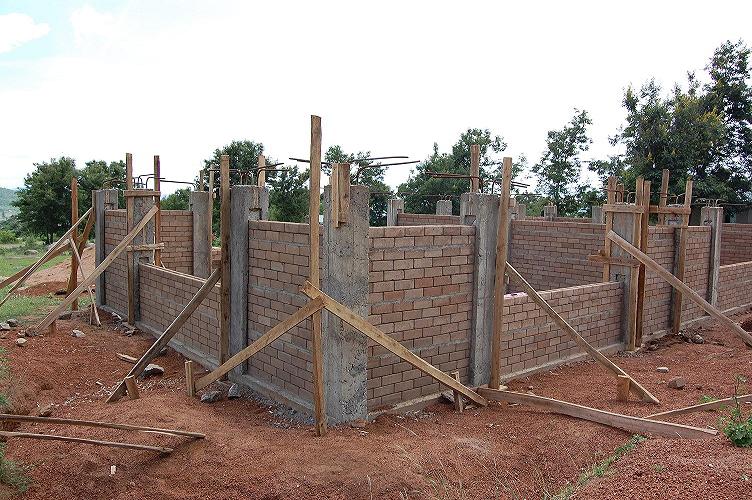 |
| Bracing being put into place |
Tuesday we got a bright and early start (we were on the road by 620am) and the second day was off to a good start. Sakei successfully got the bottom of the box into place, constructed scaffolding, and we began placing the rebar cage into place at one end of the building. This was a very difficult task, and we spent most of the day working on getting the four pieces of #6 and the stirrups into place. Work was slower today than it was yesterday, but hopefully the pace will pick up so we can pour concrete on Saturday. Once work was completed for the day we went to Shirati to place and order for the necessary lumber for the second half of the building it ended up taking one and a half hours to order 100 2x4s, 20 1x8s, 32 1x2s, 8 1x6's and 12 1x4's.
The day has finally come to an end and progress is being made on the third phase of the project.
Good Night! (or Good Afternoon for those 8 hours behind us)
Wednesday, December 5, 2012
Construction Continues!
It is once again a very exciting time for Engineers Without Borders - University of Cincinnati. Project leader Zach Banachowski and mentor Richard Elliott of Village Life Outreach Project departed today to continue construction of the school in Tanzania. Stay tuned for an update from them once they arrive!
Monday, December 3, 2012
December's EWBer of the Month

Allison Bosworth is a fifth-year Interior Design student who will be graduating this spring. She has been a member of EWB since the fall of 2007 and has maintained an active role in the group since joining. This is Allison's third year being the Design Chair for EWB-UC. Throughout the duration of her executive position Allison has designed numerous T-shirts, fliers, invitations, social media promotions, project posters, and corporate donation letters. She is also the only senior still actively serving on the executive board. Due to Allison's extensive involvement, unyielding dedication, and excellent design work, the executive board has chosen to recognize her this December as the EWBer of the Month!
Monday, November 12, 2012
Update from Burere and EWB-UC
 |
| Burere Schoolhouse with ISSB Walls (Oct 2012) |
If you are interested in helping out with this project, we are beginning our campaign to finish the school. We are trying to raise the rest of the funds needed to finish this school by Summer 2013. Click here donate to the project: https://ssl.charityweb.net/ewbusa/pfp/ewbucputaroofonit.htm
Our Nyambogo committee is also continuing the design of a water distribution system for a community in Tanzania. We recently conducted a water survey in the community in order to determine where the best location for the borehole will be. Look for more news on this project as the design continues to progress.
 |
| EWB UC, GCP, and Miami Chapter Bridge Construction |
Tuesday, August 28, 2012
Second Burere Implementation Trip Complete
 |
| Second implementation team, including EWB-UC travelers and community members |
After two weeks of construction in Burere, the columns are poured and the bricks are being laid for the two-room school building. Early last week, we removed the formwork from the columns and began laying the ISSBs (Interlocking Stabilized Soil Blocks). By the time of the EWB-UC travel team's departure from the site, the entire first row of bricks had been leveled and mortared. The community in Burere, with the help from our contractor, will be finishing the ISSB walls in the next few weeks. The next implementation phase will include the ring beam followed by the roof implementation.
 |
| Travel mentor, Richard Elliott, stripping formwork |
 |
| Columns with the formwork removed |
 |
| Otiendo and Jim laying the first bricks at the site |
 |
| Southeast corner of the building with the first brick courses |
I would like to thank Village Life Outreach Project (http://www.villagelifeoutreach.org) for their mentorship (Richard Elliott and Emily Roush Elliott) and their continued partnership on this project.
As we begin the fall semester at UC, we look forward to continuing the progress we made this summer and look to have another successful year. As a reminder, our first general meeting will be this Thursday (8/30) at 6 PM in 3250 CRC.
Friday, August 17, 2012
Columns Set and Poured For School in Burere
 |
| Overview of the columns being poured |
 |
| Head contractor, Julius, and other community volunteers binding the rebar cages |
 |
| Richard coordinating the form work construction |
For the last two days, a dedicated concrete team measured, mixed, and poured each of the 19 columns by hand. All together, 5 cubic yards of concrete were used to pour the columns. After taking a well deserved day off today, the community and travel team will begin laying the ISSB blocks this weekend and early next week. Stay tuned for a post next week with the final progress for the second phase of implementation.
 |
| Jim and community members mixing concrete |
 |
| Jim running through some on-the-go calculations with Julius on some scrap wood |
 |
| Otiendo pouring concrete into the column |
 |
| Ben shortly after vibrating the box by hand to settle the concrete |
 |
| Ben with future beneficiaries of this project |
 |
| EWB-UC travel team and community workers in front of the site |
Friday, August 10, 2012
Burere School Second Implementation Phase Kicks-off
 |
| Second EWB-UC implementation team after the first day of work on site. |
 |
| Jim Moyer mid stroke. |
 |
| Travel mentor, Richard Elliott, coordinating column formwork |
On Day 2, the team made it's first trip to the project site in Burere, where we were met by a large group from the community eager to continue construction. The team broke into groups, cutting the rebar (#3 and #6 bar) by hand, making ISSB's, and putting together the form work for the columns. After a long day under the equatorial sun, we had all the rebar cut and 2 of the 19 column boxes assembled. Our goal is to completely assemble the corner columns of the building, so we can begin pouring the columns in stages early next week. We have already made great progress and we are looking forward to completing another successful phase of implementation.
Keep up with the blog in the coming two weeks for updates and pictures as we continue construction in Burere.
Wednesday, June 27, 2012
Brick Making Begins in Burere
On Monday, we visited the Burere site to train the community on the making of the ISSB brick that will become the walls of the future school building. Our partner, Village Life Outreach Project, has previously used the ISSB (short for Interlocking Stabilized Soil Block) in the construction of the Roche Health Center. Village Life has allowed us to borrow the press, which they purchased for building projects in the Shirati area, for use in the Burere project. We owe them a thank you for not only allowing us to use the press, but for helping arrange the training for the Burere Village members. The Burere project is a part of a larger Village Life initiative to spread ISSB technology through the Shirati area.
The series of pictures below were taken during the training and have been arranged to show the steps as they were shown to us. The training was led by Daniel who is also our translator. When the press was originally purchased, he traveled to Nairobi to be trained by Makiga (the press manufacturer). After the day of training, a crew of Burere Village members took over the ISSB making process and has continued to manufacture bricks for the past few days.
I will be visiting the site tomorrow to check in on the brick making process. The training went very well and I expect to see some solid progress in Burere tomorrow.
 |
| Clear and level a space for the press to operate |
 |
| Bolt the press to the platform and oil the moving parts |
 |
| Sieve the soil for the bricks |
 |
| Mix the soil with cement (at about 11 parts soil and 1 part cement) |
 |
| Add water and mix thoroughly |
 |
| Place the mixed soil and cement into the mold and level it off |
 |
| Close the press over the soil |
 |
| Pull to compress the brick |
 |
| Eject the brick by pulling the handle back |
Subscribe to:
Posts (Atom)